Tesla Roadster Debut Lifts CFRA Price Target to $475: "The Musk Magic Is Back"
For years, Tesla investors have had to look beyond the company’s cars for the next big reason to believe. The company’s long-promised next-generation Roadster may have provided one.
Following Tesla’s latest presentation of the electric sports car, CFRA Research analyst Garrett Nelson raised his price target for Tesla to $475 from $385, arguing that the event revived some of the technological excitement that has historically surrounded Elon Musk’s most ambitious projects. The reaction reflects something larger than enthusiasm for a new vehicle. Tesla has spent much of the past several years trying to convince investors that its future will be defined by more than automobile sales. The Roadster, with its extreme performance claims and close association with SpaceX technology, offered a reminder of that broader ambition.
For investors who have followed Musk’s companies for years, the spectacle was familiar. And that familiarity may be precisely what the market is responding to.
A Roadster Designed to Make an Impression
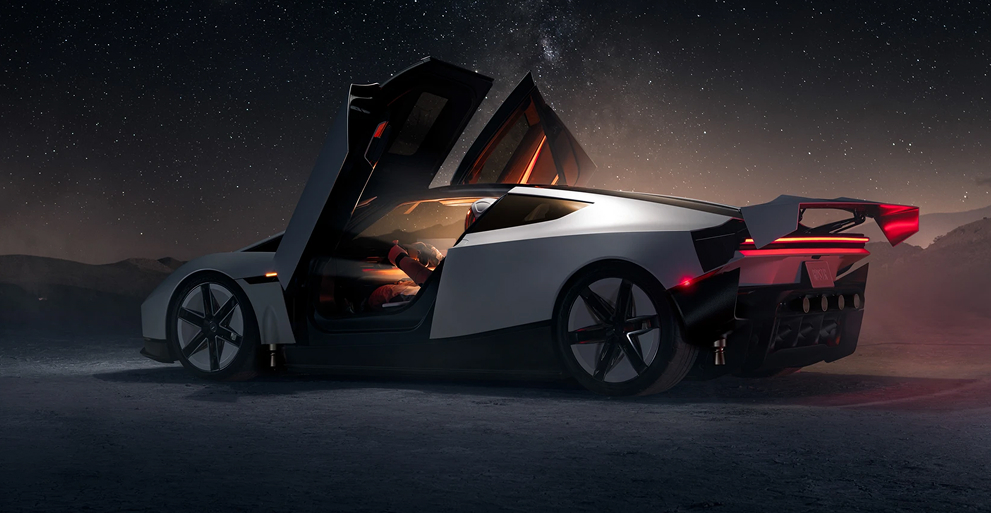
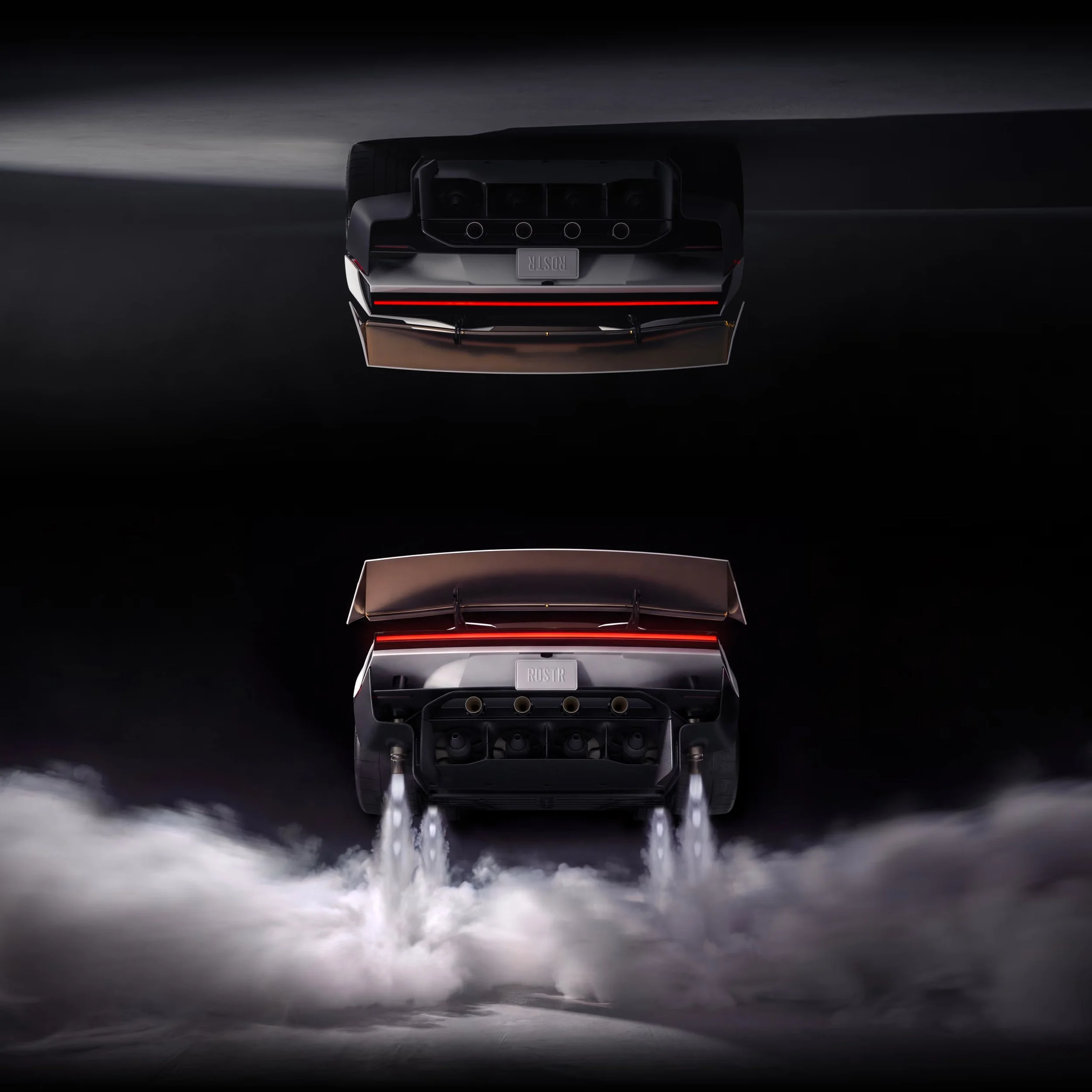
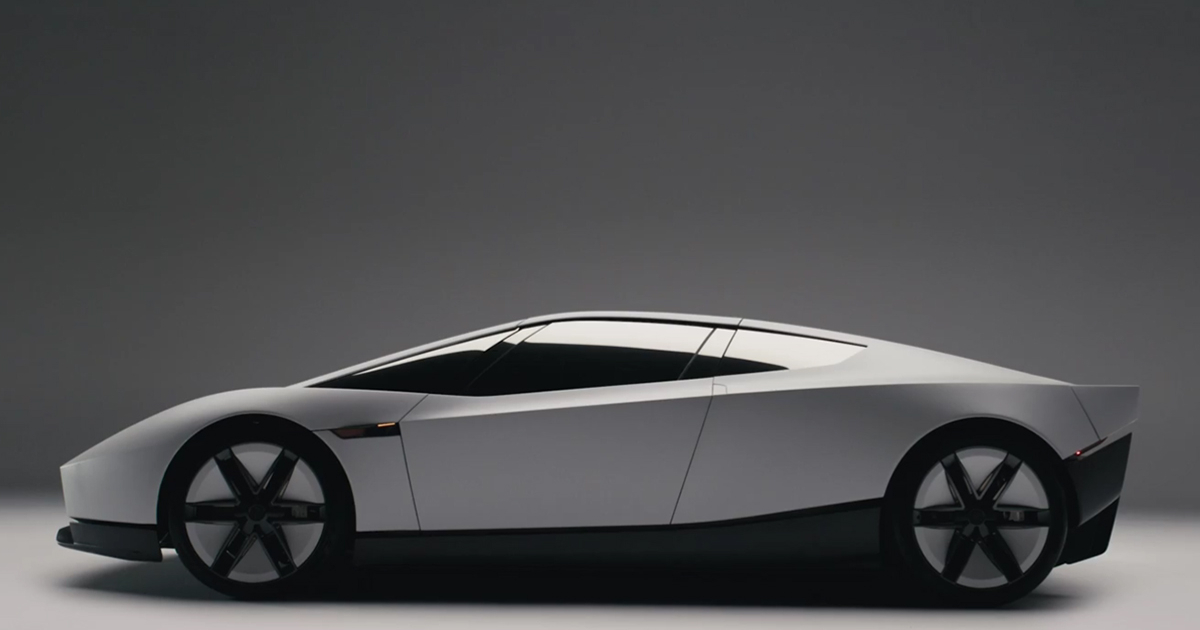
Tesla first unveiled the second-generation Roadster in 2017, promising a car capable of accelerating from zero to 60 mph in less than two seconds and eventually reaching speeds far beyond what most production vehicles could achieve. Its development subsequently became one of the company's most visible unfinished projects. That changed with the latest presentation, which again placed the Roadster at the center of Tesla's technological narrative. The company has promoted an acceleration figure of roughly 0.81 seconds from zero to 60 mph and has tied the vehicle to technology developed in conjunction with SpaceX. The most striking element is a proposed cold-gas thruster system intended to provide additional bursts of acceleration and maneuverability. Whether those specifications ultimately translate into a commercially viable production vehicle remains to be seen. Tesla has indicated that production is expected to begin in 2028. But the Roadster was never simply about selling another Tesla. It was designed to demonstrate what the company believes electric propulsion, software and aerospace technology could eventually accomplish when combined in a consumer product. That distinction is important to investors. Tesla's valuation has long depended, at least in part, on expectations that the company will become something larger than an automaker. The Roadster gives Musk an unusually visible way to make that argument.
Why CFRA Raised Its Target
Nelson's decision to lift the price target to $475 reflects the degree to which investor expectations around Tesla can change when the company produces a compelling technological demonstration.
Tesla's stock has often traded not simply on current vehicle deliveries or quarterly earnings, but on expectations surrounding what Musk's companies might build next. Those expectations have supported some of the market's most aggressive valuations of the company. They have also created considerable volatility. For CFRA, the Roadster presentation appears to have reinforced the idea that Tesla still possesses the ability to generate the kind of technological excitement that originally separated it from traditional automakers. The company's financial performance remains important. So do vehicle deliveries, margins, competition from Chinese manufacturers and established global automakers, and the pace at which Tesla develops autonomous-driving technology. But markets often move before those fundamentals fully change. A product capable of changing the narrative can therefore have an impact disproportionate to its immediate contribution to revenue. The Roadster may be one of those products.
The SpaceX Connection Changes the Conversation
The Roadster presentation also comes at a time when the relationship between Tesla and SpaceX is receiving increased attention from investors. Both companies are controlled by Musk, but they operate in very different industries. Tesla is a publicly traded electric-vehicle and energy company. SpaceX is a privately held aerospace company whose businesses include satellite communications and launch services. The possibility of some form of closer corporate relationship has consequently generated significant speculation.
TA Tesla-SpaceX merger, however, should not be confused with an announced transaction. There is no confirmed merger that investors can currently value as part of Tesla's financial outlook. That has not stopped the subject from becoming part of the broader Musk investment narrative. The reason is straightforward: combining Tesla's manufacturing and artificial-intelligence ambitions with SpaceX's aerospace and satellite businesses would create an extraordinarily large technology enterprise. It would also present enormous financial, regulatory and governance complications. For now, the more immediate significance of the Roadster's SpaceX connection is technological rather than corporate. The use of aerospace-inspired propulsion reinforces Musk's longstanding argument that the boundaries between his companies' technologies can be blurred. For shareholders, that raises an obvious question: how much of Tesla's future value should come from businesses it operates today, and how much should be attributed to opportunities that have yet to become businesses at all?
Tesla's Investment Story Has Changed
Tesla was once valued primarily as an electric-car manufacturer challenging the world's largest automakers. That description has become increasingly inadequate. The company now presents itself as a player in autonomous driving, artificial intelligence, robotics, energy storage and software, alongside its core automotive business. Musk has repeatedly argued that autonomous vehicles and humanoid robots could eventually become more important to Tesla's valuation than selling cars. That vision is central to the company's long-term investment case. It is also where the gap between expectations and execution becomes most significant.
A company can generate enormous enthusiasm by demonstrating what might eventually be possible. Investors, however, ultimately have to determine whether those possibilities can be converted into products, revenue and sustainable profits. The Roadster is a particularly useful example. Its specifications are designed to capture attention. But the economic significance of a limited-production sports car is unlikely to transform Tesla's financial statements by itself. Its real value may lie in demonstrating technological capability, strengthening the Tesla brand and reminding investors why the company has historically commanded a valuation far beyond that of conventional automakers.
The Risk Behind the Excitement
That does not mean investors should ignore the risks. Tesla remains exposed to the realities of the global automobile market. Competition has intensified, particularly in China, while electric-vehicle growth has become more uneven across major markets. The company also faces pressure to improve margins, expand its product lineup and deliver on increasingly ambitious promises around autonomous driving and artificial intelligence. Those challenges do not disappear because the Roadster is impressive. Neither does the long history of delays surrounding the vehicle itself.
Tesla's ability to execute has always been the other side of the Musk story. The company's reputation was built on ambitious deadlines and unconventional engineering decisions, but some of its most anticipated products have taken considerably longer to arrive than initially suggested. That is why the Roadster's eventual production matters. A demonstration can change sentiment overnight. A successful commercial launch has to survive engineering, manufacturing, regulatory and financial realities. Investors will eventually have to judge Tesla on both.
The Musk Factor
Few executives have such a direct influence on the valuation of a public company. Musk's supporters see him as one of the world's most effective technology entrepreneurs, capable of turning industries that appeared resistant to disruption into markets shaped by new technology. His critics argue that Tesla's valuation has repeatedly depended on promises that have proved difficult to deliver on schedule. Both views can coexist. What is difficult to dispute is that Musk remains unusually effective at capturing investor attention. The Roadster is a case in point. A vehicle that had spent years on the sidelines suddenly became part of a much broader conversation about electric propulsion, aerospace technology, artificial intelligence and the future structure of Musk's business empire. That is the "Musk magic" investors are really debating. It is not simply whether he can build an extraordinary car. It is whether he can continue convincing the market that the collection of companies and technologies around him represents something considerably larger than the businesses visible on their balance sheets today.
What Investors Will Be Watching
The next test will be execution. For Tesla, that means more than getting the Roadster into production. Investors will be watching the company's vehicle deliveries, margins, energy business, progress toward autonomous driving, development of Optimus and the commercial prospects of its artificial-intelligence initiatives. They will also be watching Musk's broader corporate strategy. The possibility of deeper ties between Tesla and SpaceX will remain a subject of speculation, but investors should distinguish between what has been demonstrated and what remains hypothetical. That distinction matters particularly for a company whose valuation can move sharply on expectations.
For now, CFRA's decision to raise its price target to $475 signals renewed confidence that Tesla still has the capacity to surprise the market technologically, and that Musk's ability to generate enthusiasm around ambitious projects remains a meaningful part of the investment case. The Roadster alone does not justify Tesla's valuation. But it may have reminded investors why they were willing to assign the company such a valuation in the first place. After years in which Tesla's story has increasingly revolved around execution, competition and the challenges facing its core automobile business, the Roadster has shifted some of the attention back toward possibility. Whether that possibility becomes another successful Tesla product, a breakthrough in autonomous technology, a major expansion into robotics and AI, or eventually some closer relationship with SpaceX remains uncertain. For investors, that uncertainty is both the attraction and the risk. For the moment, though, the market appears willing to give Musk another opportunity to prove that the next chapter of Tesla's story can be considerably bigger than the last.